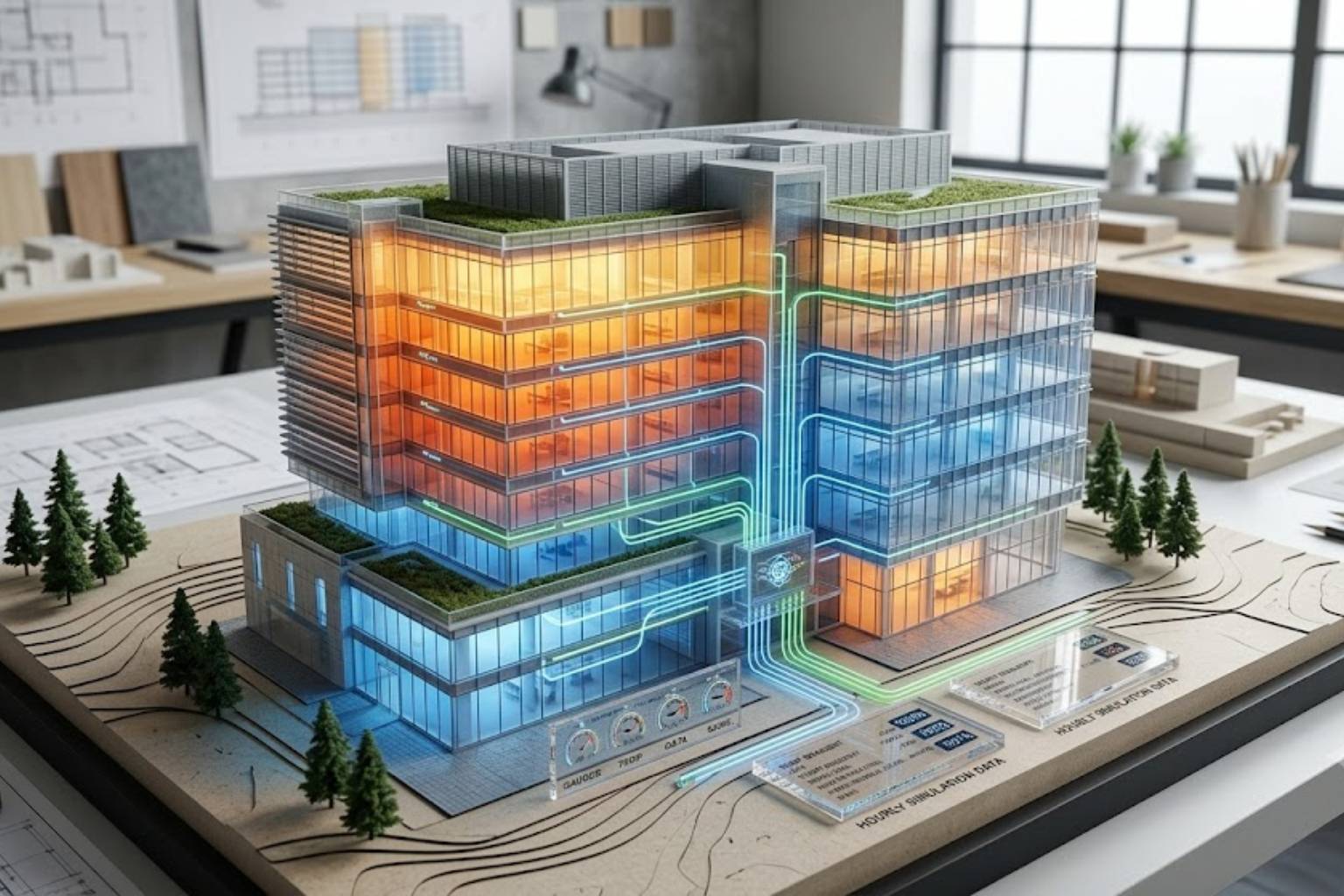
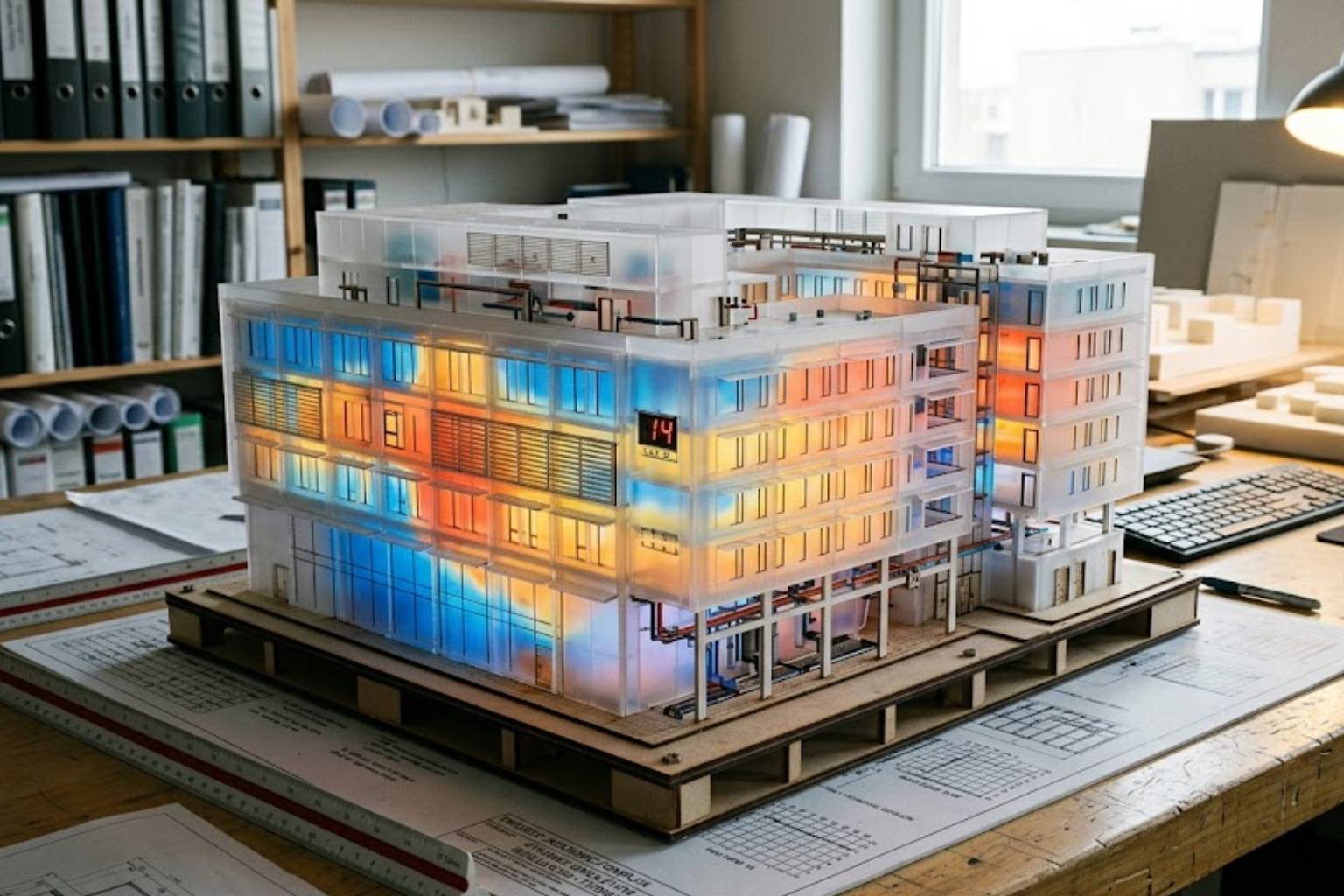
TerMus PLUS — Dynamic Energy Analysis and Simulation Software
Stop Approximating. Start Simulating.
Stationary calculations give you a rough estimate of how a building might perform. Dynamic energy analysis software gives you the truth — hour by hour, across every climate condition, for every design decision that affects energy consumption. TerMus PLUS is the only building energy simulation platform that combines the power of the EnergyPlus™ high-performance solver with the simplicity of BIM 3D modelling — making rigorous dynamic thermal simulation accessible to every energy engineer and building designer.
Certification Callout buildingSMART International® Certified — IFC 4.0 import certified for BIM-integrated energy workflows.
Trust Statement Before technology, there has to be a relationship. ACCA software and Isotech work alongside energy engineers, MEP consultants, and sustainability professionals across the GCC — coaching and supporting your adoption of professional dynamic energy analysis software at every step.
Value Pillars
EnergyPlus™ Solver. Professional-Grade Building Energy Simulation.
TerMus PLUS is powered by EnergyPlus — the US Department of Energy's high-performance simulation engine, the global reference standard for building energy performance analysis. Not an approximation. The actual standard.
BIM-Connected Energy Modelling Software
Import from IFC, DXF, or DWG. Assign thermal properties, systems, and generators to BIM objects. The energy model is built from the architectural model — not re-entered from scratch in a separate environment.
Hourly Energy Simulation. Every Hour of Every Day.
Dynamic thermal simulation in TerMus PLUS runs at hourly resolution — capturing the real behaviour of a building under actual climate conditions, not averaged seasonal assumptions. The foundation of credible building energy performance analysis.
Dynamic Comparison of Design Solutions
Compare alternative envelope specifications, HVAC configurations, glazing ratios, and shading strategies directly within the dynamic energy analysis software — with results displayed side by side in charts, colour maps, and 3D animations.
Isotech Support from Day One
ACCA software and Isotech coach and support energy teams across the GCC — from software configuration through to long-term workflow integration. Before technology, there has to be a relationship.
Why Dynamic Analysis Matters in the GCC
In the Middle East, Building Energy Analysis Is a Design Imperative — Not a Compliance Exercise.
GCC buildings account for some of the highest energy intensities per square metre anywhere in the world. Cooling loads driven by extreme summer temperatures, high solar gain through glazed facades, and year-round mechanical ventilation requirements make energy performance a critical design variable on every project — residential, commercial, or public.
Meeting UAE Green Building requirements, Saudi Building Code energy mandates, Estidama Pearl rating criteria, and LEED energy prerequisites requires more than a stationary calculation. These frameworks increasingly require or reward dynamic energy analysis — hourly simulation that proves performance under real climatic conditions rather than approximate seasonal averages.
TerMus PLUS is the dynamic energy analysis and simulation software built for this requirement. Powered by EnergyPlus, verified against international standards, and supported by Isotech with the regional implementation expertise to make compliance-grade energy modelling a practical part of every project workflow.
Core Capabilities
The Complete Dynamic Energy Analysis and Simulation Software Workflow.
TerMus PLUS builds the building energy model from the architectural geometry — not from scratch. Import DXF or DWG CAD files as the geometric reference, or load BIM models in IFC format from Edificius, Revit, Allplan, ArchiCAD, or any IFC-certified authoring tool. Assign each architectural element — walls, roofs, floors, windows, doors, and rooms — with the thermal properties, material layers, and system characteristics required for dynamic energy simulation.
The BIM object library includes extensive material databases and component libraries — envelope assemblies, glazing specifications, mechanical systems, and generators — covering the construction products commonly used in GCC building design. A dynamic bill of quantities is integrated with the BIM model, ensuring that energy-related material specifications are always aligned with the cost model.
As buildingSMART International certified energy modelling software with IFC 4.0 import, TerMus PLUS participates fully in openBIM project workflows — with the energy model coordinated with the architectural, structural, and MEP models through the same IFC exchange used for the rest of the project team.
Accurate building energy performance analysis requires accurate, location-specific climate data. TerMus PLUS integrates the METEONORM climate archive — the professional reference standard for climate data in energy engineering — providing hourly climate data for any GCC location, capturing the specific temperature, humidity, solar radiation, and wind conditions that determine the actual thermal behaviour of a building in that environment. EnergyPlus climate data can also be imported directly for additional location flexibility.
Defining HVAC systems, occupancy schedules, internal gains, and thermostat setpoints is one of the most complex and error-prone aspects of building energy simulation. TerMus PLUS provides a guided definition workflow for setpoints, systems, and generators — with predefined templates for the most common building types and usage profiles, and customisable options for complex or unusual configurations.
Usage profiles and hourly scheduling define how each zone of the building is occupied, conditioned, and lit across every hour of the simulation year — reflecting the real operational patterns of residential, commercial, office, retail, hotel, and other building types common in GCC development.
Before the simulation runs, TerMus PLUS checks the completeness and consistency of the project data in real time — identifying missing inputs, contradictory specifications, and potential modelling errors before they affect the simulation results. This diagnostic capability saves the iteration time that energy engineers on deadline cannot afford.
The simulation itself is run by EnergyPlus — the US Department of Energy's open-source, peer-reviewed dynamic building energy simulation engine, recognised globally as the reference standard for building energy performance analysis. TerMus PLUS provides the BIM-connected interface and guided workflow that makes EnergyPlus accessible to every energy engineer — without requiring expertise in raw EnergyPlus input file preparation.
Hourly energy simulation runs across the full year at one-hour timesteps — capturing the dynamic thermal behaviour of every zone, every envelope assembly, and every system interaction as climate conditions change hour by hour. The result is a complete, time-resolved picture of how the building performs: heating and cooling loads, energy consumption by system and end use, peak demand, thermal comfort, and more.
Simulation results are presented in multiple formats — structured reports for authority submission, tabular data for engineering review, charts and graphs for client presentation, colour-mapped 3D views for immediate visual understanding of where energy is gained or lost, and 3D animations that communicate thermal behaviour dynamically over time.
The dynamic comparison function allows multiple design alternatives to be simulated and compared directly within TerMus PLUS — envelope specifications, window-to-wall ratios, glazing types, shading device configurations, HVAC system options — with results displayed side by side so the energy impact of each design decision is clearly visible before it is finalised.
Isotech Differentiator
Dynamic Energy Analysis Software. With Regional Expertise and Long-Term Support.
TerMus PLUS is dynamic energy analysis and simulation software from ACCA — one of the world's most respected AEC software developers, with deep expertise in building engineering tools and a global user base of energy professionals. As Isotech, we bring it to energy engineers, MEP consultants, sustainability consultants, and AEC firms across the Middle East and Africa with the implementation support, regional climate knowledge, and hands-on guidance that professional energy modelling in this region demands.
In the GCC, where building energy performance requirements are being raised through green building mandates, sustainability rating systems, and net zero commitments, the quality of the dynamic energy analysis software and the expertise behind its application both determine the quality of the results.
Isotech provides the coaching and support that turns TerMus PLUS from a trial download into a functioning, compliant, and productive energy modelling workflow — configured for your project types, your regional climate conditions, and the specific building energy standards your projects must satisfy.
What Our Testimonials Say

Marcin Pszczolka
Poland • Civil Design Lead
Pierpaolo Canini
SwitzerlandVictor Fuentes
Chile
David Quevedo
Ecuador
Marcin Pszczolka
Poland • Civil Design Lead
Pierpaolo Canini
SwitzerlandVictor Fuentes
Chile
David Quevedo
EcuadorTechnology Partner
We are proud to partner with ACCA Software, a global provider of BIM, digital construction, and Common Data Environment (CDE) solutions. Through this collaboration, we leverage advanced technologies that support ISO 19650-compliant workflows, streamline project coordination, and enhance information management across the entire project lifecycle.
This partnership enables us to deliver innovative, scalable, and industry-aligned solutions that help clients improve collaboration, efficiency, and project outcomes.
Questions Worth Answering Up Front.
What is dynamic energy analysis software and why is it better than stationary calculation?
Dynamic energy analysis software simulates the hour-by-hour thermal behaviour of a building across the full year — accounting for changing climate conditions, solar gains, occupancy patterns, internal heat sources, HVAC system operation, and envelope thermal mass, all interacting simultaneously in real time.
Stationary calculation methods — used in many standard energy rating procedures — calculate energy performance using averaged or design-day conditions. They provide a simplified estimate of annual energy demand, but they cannot capture the dynamic interactions between the building fabric, the systems, and the climate that determine real performance. They cannot predict peak cooling loads accurately. They cannot show how a design decision made in one zone affects thermal comfort in another. They cannot evaluate the time-shifting effect of thermal mass on cooling demand in a hot climate.
For GCC buildings — where cooling loads dominate and the gap between static estimate and dynamic reality is largest — the difference between a stationary calculation and a dynamic energy simulation is the difference between an approximate answer and a reliable one. TerMus PLUS provides the reliable one, powered by the EnergyPlus solver.
What is EnergyPlus and why does TerMus PLUS use it?
EnergyPlus is the dynamic building energy simulation engine developed and maintained by the US Department of Energy — peer-reviewed, open-source, and recognised globally as the technical reference standard for building energy performance analysis. It is the engine behind many of the world’s most rigorous building energy simulation workflows and is accepted by green building rating systems including LEED as the basis for energy performance modelling.
TerMus PLUS integrates EnergyPlus as its simulation engine, providing the professional-grade accuracy of the EnergyPlus solver within a BIM-connected, guided interface that makes hourly energy simulation accessible to every energy engineer — without requiring expertise in raw EnergyPlus input file syntax. The result is a dynamic energy analysis and simulation software platform that combines reference-standard accuracy with practical usability for day-to-day project work.
How does TerMus PLUS support building energy performance analysis for GCC compliance frameworks?
GCC building energy compliance frameworks — including UAE Green Building Regulations, Saudi Building Code energy requirements, Estidama Pearl Rating System, Abu Dhabi International Building Code, and LEED energy prerequisites — increasingly require or reward dynamic simulation rather than stationary calculation. TerMus PLUS supports these frameworks in three specific ways.
First, it uses METEONORM climate data and EnergyPlus climate files for specific GCC locations — providing the location-accurate climate inputs that compliance submissions require. Second, it produces the hourly simulation results, load profiles, and annual energy consumption breakdowns that compliance reviewers and rating assessors need to evaluate performance claims. Third, its structured calculation reports and result documentation are formatted for submission to authorities and rating bodies — covering all required output parameters in a professionally presented format. Isotech provides configuration support to align TerMus PLUS workflows with the specific requirements of the compliance framework applicable to your project.
What is hourly energy simulation and why does it matter for hot climate design?
Hourly energy simulation runs the building energy model through every hour of the simulation year — 8,760 individual calculation steps — with the actual weather conditions for each hour applied to the model. Every hour, the simulation calculates heat transfer through every envelope surface, solar gains through every glazed element, heat gains from occupants and equipment, HVAC system response to maintain setpoints, and the resulting energy consumption for each end use.
For hot climate design in the GCC, hourly energy simulation is particularly important for three reasons. First, cooling load peaks are driven by specific combinations of temperature, solar radiation, and humidity that only occur for a small number of hours each year — and stationary methods that average these conditions underestimate the true peak and therefore the required system capacity. Second, thermal mass behaviour — the ability of heavy construction to absorb heat during the day and release it at night — can only be properly evaluated through dynamic simulation, not stationary calculation. Third, the effectiveness of passive design strategies like external shading, high-performance glazing, and natural ventilation in reducing cooling energy can only be quantified through dynamic analysis of hour-by-hour thermal interactions.
How does TerMus PLUS integrate with BIM workflows?
TerMus PLUS is buildingSMART International certified energy modelling software with IFC 4.0 import capability. Architectural BIM models from Edificius, Revit, ArchiCAD, Allplan, and any IFC-certified authoring tool can be imported directly into TerMus PLUS — with walls, roofs, floors, windows, doors, and rooms brought in as the geometric foundation for the energy model. Thermal properties, material layers, and system characteristics are then assigned to these imported BIM objects, producing the complete building energy model without manual geometry re-entry.
This BIM integration means that when the architectural design changes, the energy model can be updated by reimporting the revised IFC file — maintaining alignment between the design and the energy analysis through every design iteration. The energy model participates in the same openBIM coordination workflow as the rest of the project: exportable in IFC format, manageable within the usBIM.platform common data environment, and coordinated with the structural and MEP models through standard IFC exchange. Isotech provides workflow design support to integrate TerMus PLUS into your existing BIM project environment.
Dynamic Energy Analysis Software That Gives You the Reliable Answer — Not the Approximate One.
TerMus PLUS is the dynamic energy analysis and simulation software that brings EnergyPlus precision and BIM workflow simplicity together in one platform — making hourly energy simulation, building energy performance analysis, and compliance-grade dynamic thermal simulation a practical part of every energy engineer’s project workflow. Backed by Isotech’s regional expertise and coaching support from day one.
Try it for free. Simulate with confidence. Build with Isotech alongside you.
“Technology creates possibilities. Relationships create successful outcomes.”